Key Takeaways
-
- Cheng Beng in Malaysia is a time for Chinese families to honour ancestors by visiting graves or columbarium niches, cleaning the resting place, and offering prayers.
- Qingming usually falls on 4 or 5 April, but many Malaysian families observe it within 10 days before or after the date for convenience and to avoid peak traffic.
- Common Qingming offerings include Sam Seng, rice, tea, fruits, joss sticks, candles, joss paper, and cleaning supplies for tomb-sweeping.
- The usual Qingming ritual order includes praying, cleaning the grave, arranging offerings, bowing to ancestors, burning paper offerings, and concluding with a family meal.
- Important Qingming taboos include avoiding loud behaviour, stepping on other graves, wearing overly bright clothing, and disturbing other families’ memorial spaces.
The Qingming Festival, also commonly known as Tomb-Sweeping Day or “Cheng Beng” in the Hokkien dialect, is one of the most significant cultural observances for the Chinese community in Malaysia. It is a time to visit graves or columbarium niches, clean the resting place, prepare offerings, and pay respects to loved ones who have passed on.
In Malaysia, Qingming is more than a yearly custom. It reflects the long-standing values of filial piety, remembrance, gratitude, and family continuity. For younger family members, it may also be a time to learn about long-held traditions from parents and elders.
What is the Purpose of the Qingming Festival?
The purpose of the Qingming Festival is to honour and remember one’s ancestors. During this time, families gather to show respect by cleaning the grave, presenting food and incense offerings, and offering prayers.
The word “Qingming” (清明) is often translated as “Pure and Bright.” Although the festival originally reflects the spring season in China, in Malaysia, it is mainly observed as a dedicated time for ancestral remembrance.
For many families, Qingming serves several important purposes:
-
- to express gratitude to ancestors
- to maintain graves or niches respectfully
- to continue family traditions across generations
- to gather as a family and strengthen family ties
- to ensure the deceased are not forgotten
This is why Cheng Beng remains deeply meaningful for many Chinese-Malaysian households, even as burial and memorial practices evolve.
When Is the Best Time to Visit During Qingming?
Qingming usually falls on 4 or 5 April each year. However, in Malaysia, many families do not limit the visit to the exact date itself.
A common local practice is the “10 days before and 10 days after” period, which gives families flexibility to choose a suitable day, especially when coordinating relatives’ schedules or avoiding peak congestion at cemeteries and memorial parks.
In Malaysia, families typically visit graves:
-
- On the actual Qingming date (4th or 5th April)
- During the 10 days before or after Qingming
- On weekends for convenience
- Early in the morning to avoid crowds and heat
It is advisable to visit early in the morning due to:
-
- Cooler weather
- Less crowded cemeteries
- Cultural belief that morning hours are more auspicious
If you plan to visit a cemetery or columbarium in Kuala Lumpur or Selangor, it is advisable to leave early and plan ahead, as Qingming traffic can be especially heavy during peak weekends.
What to Prepare for Qingming?
Preparing for Cheng Beng usually involves both ritual items and practical cleaning supplies. The exact offerings may vary between families, but the following are commonly prepared in Malaysia.
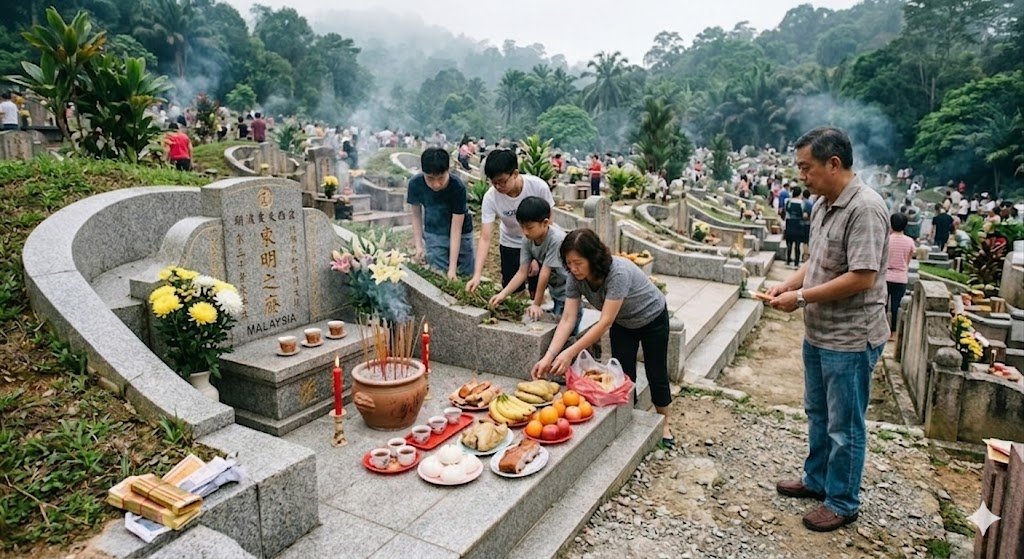
1. The Three Meats (Sam Seng): Traditionally, this includes a whole boiled chicken, roast pork (Siew Yoke), and sometimes duck. Some families also prepare dishes that the deceased enjoyed during their lifetime.
2. Staple Foods: Bowls of rice, chopsticks, tea, and rice wine are essential. Many Malaysian families also include Huat Kueh (steamed sponge cakes) and red tortoise cakes (Ang Ku Kueh), symbolising prosperity and longevity.
3. Fruits: Choose fruits with auspicious meanings, such as apples (peace) and oranges (wealth). Avoid fruits like pears (which sound like “separation” in Chinese) or melons (often associated with death in certain dialects).
4. Joss Sticks and Candles: Incense and candles are often used during the prayer ritual as part of showing respect to ancestors.
5. Paper Offerings (Joss Paper): This includes “Hell Banknotes,” gold and silver foil paper, and increasingly modern paper replicas such as smartphones, designer bags, luxury cars, and even massage chairs.
6. Cleaning Supplies: Since “Tomb-Sweeping” is the literal name of the day, you should bring brooms, paint for refreshing the inscriptions on headstones, and gardening shears to clear weeds.
What are the Rituals of Qingming?
The exact order of Qingming rituals may vary, but many Chinese families in Malaysia follow a similar general sequence.
Step 1: Praying to the Earth God (Tu Di Gong)
Before attending to the ancestor’s grave, you must first pay respects to the Earth God, who acts as the guardian of the cemetery. Offerings are placed at his small shrine to seek permission and protection.
Step 2: Cleaning the Grave
The family works together to clear weeds, sweep away debris, and clean the headstone. If the red or gold paint on the inscriptions has faded, it is customary to repaint them during this time.
Step 3: Setting the Table
Arrange the food and wine in front of the headstone or niche. Light the candles and the joss sticks.
Step 4: Invoking the Ancestors
The head of the family leads the prayer, calling out the names of the ancestors and inviting them to consume the meal. This is when the family members bow or kowtow in order of seniority.
Step 5: Burning the Offerings
Once the incense has burned halfway, the family burns the paper offerings in a dedicated burner or a designated spot. It is common to “toss” the paper money into the fire while calling out to the ancestors to “collect their money.”
Step 6: Closing and Consuming the Food
Once the ritual is completed, the family may pack up the offerings and bring the food home, or gather for a meal together afterwards. It is believed that eating food blessed by the ancestors brings good fortune.
What Should You Not Do During Qingming?
To ensure a respectful and “lucky” observation, there are several cultural taboos that should be observed. Many Malaysians take these very seriously to avoid attracting bad luck or offending spirits.
1. Avoid Bright Red Clothing
Avoid overly bright, flashy, or festive clothing. Modest and comfortable attire is generally more appropriate for cemetery or columbarium visits.
2. Do Not Take Photos of Other People’s Graves
Taking a photo of your own family’s site is generally acceptable now, but capturing images of other people’s graves is seen as an invasion of privacy and disrespectful to the spirits of strangers.
3. Pregnant Women and Infants Should Stay Home
From a traditional Chinese medicine and folklore perspective, cemeteries are considered “Yin” (cold/dark) environments. Pregnant women, infants, and those who are feeling unwell are thought to have weaker “Qi” and should avoid the cemetery to prevent “spirit interference.”
4. Do Not Step on Other Graves
Be mindful of where you walk. Stepping directly on a grave or over someone else’s offerings is a major sign of disrespect.
5. No Joking or Loud Shouting
Maintain a sombre and respectful volume. Cracking jokes or laughing loudly is considered an insult to the deceased.
6. Avoid Going Late at Night
Ideally, the ritual should be completed before 3:00 PM when the “Yang” energy is still strong.
Modern Adaptations in Malaysia: What to Expect in the Columbarium for Qingming
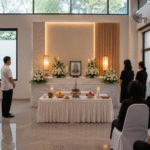
As urban land becomes more limited in places such as Kuala Lumpur and Selangor, many families now observe Qingming at columbariums instead of traditional burial grounds.
While the meaning of the visit remains the same, the experience is often more structured.
Things to expect during a columbarium visit:
-
- pre-booked visiting slots during peak Qingming periods
- crowd-control measures at popular memorial halls
- restrictions on open flames or paper burning
- limits on large food displays
- designated prayer or burning areas
What should families prepare for a columbarium visit?
In many modern memorial halls, simpler offerings are more practical. Families may bring:
-
- flowers
- fruit
- incense, if allowed
- cloths or tissues for wiping the niche
- small symbolic offerings permitted by management
Before visiting, it is best to check the columbarium’s guidelines in advance. This helps avoid inconvenience on the day itself and ensures the observance is carried out smoothly and respectfully.
Conclusion
The Qingming Festival is more than just a day of sweeping graves; it is a profound cultural touchstone for the Chinese-Malaysian community. By understanding the purpose, preparing the right offerings, and respecting traditional taboos, you honour your ancestors’ legacy in the most meaningful way possible. If you are visiting a cemetery or columbarium during Qingming, planning ahead and following your family’s traditions can help make the experience more meaningful and smooth.
FAQs
1. Can Qingming be observed on another day?
Yes. Many families observe Qingming within a suitable period before or after the actual date, depending on family schedules and tradition.
2. What food is offered during Qingming?
Common offerings include fruits, roast meat, biscuits, rice, tea, and dishes the deceased enjoyed in life.
3. Is burning joss paper necessary?
Not always. This depends on family beliefs, religious practice, and the rules of the cemetery, memorial park, or columbarium.
4. Is Qingming only for families with burial graves?
No. Families may also honour ancestors at columbariums, temples, or home altars.
5. What should I wear for Qingming?
Simple, modest, and respectful clothing is generally recommended. Comfortable footwear is also important for cemetery visits.